


Three 3-week Themed Travel Itineraries for Guatemala - Backpacking, Hiking and Culture
- Ilse

- 21 hours ago
- 20 min read
Since I started slow travelling full-time in 2023, I have spent over eight months in Guatemala. It was the first stop on my big trip and I right away stuck around for over three months, then went backpacking in Mexico for one month before coming back to Guatemala again. Since then, I have returned twice - to work on a documentary project in forestry concession community Uaxactún near Tikal in 2024 and to travel the country with the production team of a fiction film in 2025.
In this post, I will give three different Guatemala travel itineraries for three weeks each. My travel philosophy includes authentic travel and slow travel, meaning I try to provide recommendations for different travel interests instead of only the standard backpacking loops and activities. The three itineraries here are themed so you can choose one that matches your travel intentions:
If you can, I recommend going five weeks and leaving some time to follow your interests as you are there. However, I know many people are working and have limited time off and that when this is your only holiday in the year, you want to plan well. In another (extensive!) post, I have gathered all my advice and recommendations in a slow travel guide on Guatemala - from the perspective of a female traveller.

Backpacking Guatemala in three weeks - 3-week itinerary
Guatemala is a place where you can easily spend months, especially if you decide to do a language school or homestay experience, both of which I can recommend. Most people spend about three weeks here, so that is what I tailored this first itinerary for.
In nearly all of these places, you can find your stay via Hostelworld in advance. Usually you can extend your stay while you’re there, but always check with your hostel upon arrival. In terms of transport, you can either take the so-called 'chickenbuses' in between places like Antigua and Lake Atitlán or Xela and Lake Atitlán. In and out of Guatemala City, I always recommend taking a shuttle because of safety reasons or an intercity bus if you are going to Xela.
If you have want to do this itinerary and have longer than five weeks you can include less touristy and more authentic places such as Xela and Huehuetenango, or stick around longer at Lake Atitlán or in Xela for Spanish classes. See the other itineraries for more information on these places and activities.
Antigua (Day 1-5)
Land at La Aurora International Airport near Guatemala City and take a shutte straight to Antigua. On one of your first days, I always recommend exploring the city via a walking tour by a local guide to learn more about the history and get local food recommendations from the start.
Antigua is at 1.545 meters (5.069 feet) altitude, so if you might feel a bit tired the first day. Take things slow! Try walking up to Cerro de la Cruz and if that goes well, you are ready to climb Pacaya Volcano or book the two day trek onto Acatenango and Fuego to see a volcano erupt. Read my separate post with tips and advice for hiking Acatenango and Fuego based on my own experience!
To stay there are various places that I recommend. If you are looking for hostels, there are many and I have definitely not tried all of them, so definitely check out Hostelworld and roam around. Two of my favourites thus far include The Purpose Hostel because dorms are relatively cheap and comfortable, the owners and employees are great and it has a beautiful roof terrace, and Hostal de La Fuente where they offer free breakfast and dinner cooked by their Guatemalan chef (vegetarian options available!).
Beyond those, I have also heard good stories about Barbara's Boutique, Maya Papaya and Flore Hostel which has a coffee shop and breakfasts from there included. If you are going in a hotter season, Casi Casa has a pool (as well as breakfast included).
Food wise, you can do a local cooking class and you will find a variety of cuisines, superfood and veg(etari)an places, such as the more tourist-tailored Samsara and Sat Nam Cafe, or the delicious Indian Accent Restaurant. There are also a ton of digital nomad proof cafes with great (Guatemalan) coffee and cakes. For lunch, more local places will have a plato del día that is super affordable so I recommend looking for those.
El Paredon (Day 5-9)
If like me, you love the beach, then definitely visit beach town El Paredon! From Antigua you can take a shuttle or a bus.
It is one of the best places for surfing in Guatemala. El Paredon has waves for all levels, although keep in mind that it is the Pacific Ocean and this side of Central America can have wild streams and high waves. So if you are not experienced take a class and always ask a local about the (literal) ins and outs of a specific spot. You will also find various people playing fun games of beach volleyball to join in.
To stay I recommend Mellow Hostel if you like parties, or Cocorí Lodge for a more relaxed atmosphere and really good food. From El Paredon there is a shuttle directly to San Pedro La Laguna, one of the villages at Lake Atitlán.

Lago Atitlán (Day 9-14)
From El paredón to Lake Atitlán the fastest and easiest mode of transport is a shuttle as buses do not go directly. Shuttles are about 250-300 QT and take 4-5 hours. They usually leave in the morning from one of the hostels or can pick you up at the place you are staying.
Lake Atitlán is surrounded by volcanoes and Maya villages, each with its own vibe. Backpacker hotspot San Pedro La Laguna is known for its parties and is definitely the most lively at night. Be aware that the main strip is mostly owned by Israeli, which means there is great food, but you might also want to check their political opinions before you support them financially.
San Marcos is known as the hippietown of Guatemala and I have written a separate post with my criticism on it. I definitely recommend staying in other towns, but you can visit to feel the icky vibe and if you do decide to stay there then I can recommend Tarn’s place called ‘Casa Jaguar’ which is a little up the mountain.
One of the towns that I personally love most is Santa Cruz La Laguna, which is a lot calmer. Whether you stay there or decide to visit with the boats, I recommend taking a guided hike and medicinal Temazcal with the lovely Elena.
Semuc Champey (Day 14-16)
Popular amongst tourists and backpackers, discover the natural beauty of Semuc Champey’s limestone pools and explore nearby caves. From the lake you can take a shuttle or bus. Keep in mind that this takes 10-12 hours.
Semuc Champey is apparently known for scams, such as unnecessary entrance fees or supposedly ‘necessary’ tour guides you do not need. However, if you do prefer to book a tour you of course can. From what I have heard from my local friend, the best hostel here to stay is Zephyr Lodge, if that is outside of your budget go for Hostal Oasis right next door, swim in the river and enjoy the food at Zephyr when visiting.
Rio Dulce (Day 16-18)
On the way from Semuc Champey to Rio Dulce you will pass some beautiful and underrated places. Consider spending some hours at the Cataratas de Aguas Termales near La Ensenada, or stay some nights at Reserva Natural Cañón Seacacar.
Be careful if you decide to go swimming in or kayaking on the lake, there are small alligators. You can also take a boat (150Q) from here to the Carribbean side of Guatemala. In Rio Dulce definitely try the local food, including Tapado and rice and beans.
Uaxactún (Day 18-21)
From Rio Dulce take a local bus or shuttle to Flores. Here you can book a day-tour to the ancient Maya city of Tikal, but what I recommend instead or in addition is visiting forestry concession community Uaxactún which is located in the National Park of Tikal.
They have incredibly knowledgeable local guides on the lesser known archeological sites there, have two great local restaurants, and you can spend the night there. Watch the short documentary ‘Seeds for the Future’ here. From there you can continue your trip to Belize, take a 12-hour shuttle ride to Antigua, or fly from Flores’ airport to Guatemala City.
Hiking Guatemala in three weeks - 3-week itinerary
If you have been eyeing Guatemala and love hiking then you are probably aware at this point that Guatemala has some great hikes! Guatemala has a variety of landscapes, including ancient volcanoes and rainforests. So, if you’re passionate about climbing (active) volcanoes and embarking on multi-day treks, you’ve come to the right place.
This three–week itinerary is all about hiking, including actively erupting volcanoes such as Fuego and Santa Maria's son Santiaguito, the highest peak of Central Ameria Tajumulco, and several multiple day treks. In one way or another, all of these hikes can be done without a guide if you prepare well. Otherwise, there are always options to get a local guide or go with a trekking agency. Oh and... Good hiking boots and a light backpack are a must for this itinerary!
Antigua (Day 1-4)
Land at La Aurora International Airport near Guatemala City and take a shutte straight to Antigua. On one of your first days, I always recommend exploring the city via a walking tour by a local guide to learn more about the history and get local food recommendations from the start.
Antigua is at 1.545 meters (5.069 feet) altitude, so if you might feel a bit tired the first day. Take things slow! On your first days, you can try climbing Pacaya volcano to see how you are doing with the altitude before heading to Acatenango and Fuego after. I went with Soy Tours at the time, but there are various good tours going up.
To stay there are various places that I recommend. If you are looking for hostels, there are many and I have definitely not tried all of them, so definitely check out Hostelworld and roam around. Two of my favourites thus far include The Purpose Hostel because dorms are relatively cheap and comfortable, the owners and employees are great and it has a beautiful roof terrace, and Hostal de La Fuente where they offer free breakfast and dinner cooked by their Guatemalan chef (vegetarian options available!).
Food wise, you will find a variety of cuisines, superfood and veg(etari)an places, although not a Guatemalan recommendation, I really like Indian Accent Restaurant. There are also a ton of digital nomad proof cafes with great (Guatemalan) coffee and cakes. For lunch, more local places will have good breakfast options or plato del día for lunch that is super affordable so I recommend looking for those.

Acatenango & Fuego (Day 4-6/7)
If you have seen photos of Guatemala, you will have likely come across one of volcano Fuego erupting. I recommend booking a two day trek onto Acatenango and Fuego two days in advance. I went with Soy Tours and enjoyed it a lot, but I know there are various good ones and prices differ enormously.
The hike is absolutely stunning and might be one of the most amazing experiences from your trip as you see active volcano Fuego explode! Although you can see Fuego erupt from Acatenango, you can do an optional extra hike to climb Fuego itself and see the lava from even more up close. I definitely recommend doing this, read my separate post with tips and advice for hiking Acatenango and Fuego (including how much water NOT to bring and why you should bring an entire meal extra for most tour companies).
After you come back from the hike around noon the next day, I recommend staying one more night in Antigua to rest. Now is the right moment to head to Casi Casa which has a pool. While the early morning on Acatenango will be cold, the way down you will likely start sweating again. So being able to cool down in the pool will be nice.

Quetzaltenango / Xela (Day 6/7-11)
Either after you come back from Acatenango or after your extra night in Antigua, take a bus or shuttle to go to Quetzaltenango (or locally known as ‘Xela’). There are 'chickenbuses' that go until a certain point where you will have to change, these are the cheapest option.
Xela is a great base for several impressive and underrated hikes amongst backpackers. You can hike Santa María Volcano for incredible views of erupting volcanic dome Santiaguito. I did the hike by myself because I went with a Guatemalan roommate who had done the hike several times, but it can be good to go with a guide if you feel unsure.

At the natural hot springs Fuentes Georginas or Aguas Amargas, there are small hikes before getting into the water. I also recommend hiking to natural saunas 'los Vahos', you can stay there too for 100 QT a night. Bring food because they do not have a restaurant. You usually can just show up and ask to stay the night, but for the weekends it might be booked so you can try calling. In Xela, there are two hostels that are good, which are Kasa Kiwi or Casa Seibel.
Tajumulco (Day 11-12)
Tajumulco is the highest peak of Central America with over 4.000 meters. From here you can see Volcan Santa Maria, Acatenango and Fuego, and volcanoes in Mexico. While it is a beautiful hike with amazing views, only few travellers go out of their way to visit, making it extra special to go.
How to get to Tajumulco? From Xela, you take a local bus to San Marcos (NOT San Marcos La Laguna) and from there you take a bus (or taxi) to Tajumulco. There is one hotel here which you do not need to book in advance, just knock the door. Spend one night here and start your next challenge early in the morning. The hike is about six hours total. Read how to do this hike in more detail in my upcoming blogpost - subscribe to my newsletter to get notified when it is online!

Xela to Lake Atitlán (Day 12-17)
As you come back from Tajumulco you make your way to San Marcos from where you take a bus back to Xela. Stay here for one or two nights in one of the two best rated hostels to rest before you go on your next multiple day hike: from Xela to Lake Atitlán.
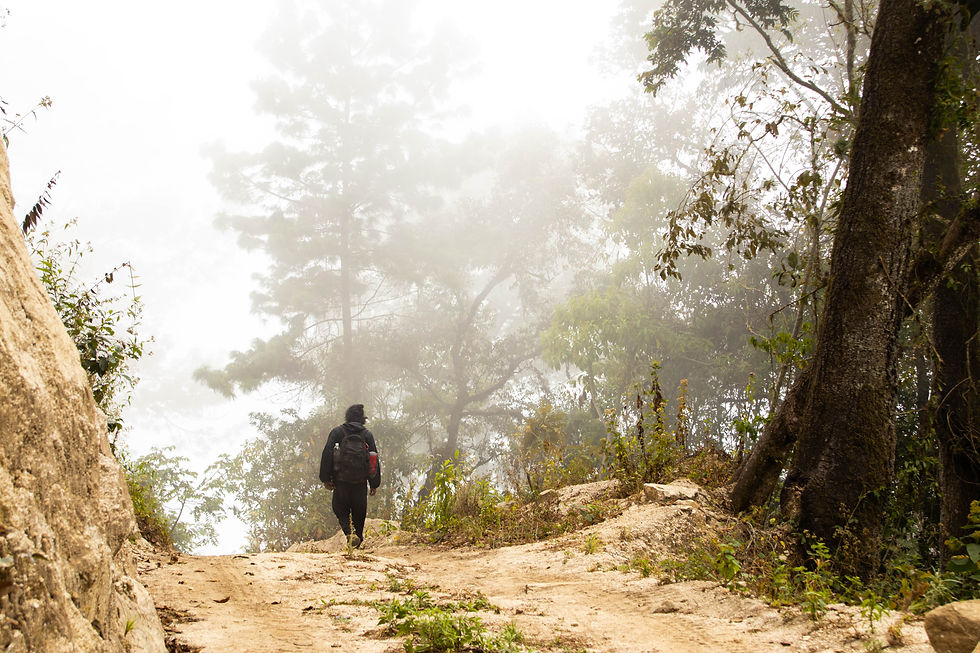
This hike takes you through various landscapes and with stunning views. Do it with a trekking company to enjoy a homestay, or do it by yourself and bring a tent, or start early and hitch hike the last kilometers to be able to finish it in one day (which is what I did at the time). Sign up for my newsletter to get notified when I upload my tips on doing this hike unguided!
Lake Atitlán (Day 17-21)
As you arrive in one of the villages around Lake Atitlán, take some days to rest from the adventurous hikes from the past week. To get some rest, I recommend staying in Santa Cruz La Laguna. There, you can do a guided hike and medicinal Temazcal with the lovely Elena. The hike is only 1-2 hours and will bring you beautiful view over the lake as well as great conversations in which you learn more about life at the lake.
If you are looking for parties, then backpacker hotspot San Pedro La Laguna is the place to be. San Marcos is known as the hippietown of Guatemala and I have written a separate post with my criticism on it. I definitely recommend staying in other towns, but you can visit to feel the icky vibe and if you do decide to stay there then I can recommend Tarn’s place called ‘Casa Jaguar’ which is a little up the mountain. Some people have requested for a guide to the towns around the lake, so I am working on one and will upload it in the upcoming weeks. Subscribe to my newsletter to get notified when it is up or simply check back in a few weeks :)
If you feel like exploring, you can take a taxi boat across the lake. This should not cost more than 20 QT - best to check the prices with a local because they tend to rip foreigners off, although sometimes there are official signs with prices which are true. If you still have energy left to be active: do one of the water activities such as kayaking.
Once you have rested or feel ready for another hike, consider climbing Volcán San Pedro for stunning lake views, or trek up Volcán Tolimán (two days) for a final challenging and rewarding experience before heading back to Antigua by chickenbus from San Pedro La Laguna or via a shuttle to go back home or to your next location.

Cultural deep dive in three weeks - 3-week itinerary
This itinerary is combines learning about history, Indigenous heritage, and the warmth of Guatemalan hospitality. This is a slow journey through the heart of Guatemala, where you will see how traditions always evolve with contemporary life. Well, as slow and deep as you can dive in 3 weeks that is ;)
To briefly share something about Guatemala's culture and people(s): Guatemala's population is incredibly diverse, encompassing numerous ethnicities and cultures. Did you for example know that, alongside the official language Spanish, there are over 20 Maya languages spoken? In smaller villages you will often find that the elders only speak their Maya language.
Additionally, religious beliefs are varied. Although you will definitely find elements of traditional Maya spirituality and practices, the largest share of the population is protestant Evangelical and the second largest is Catholic. Especially on top of volcanoes and at natural sights you will find alters and outside churches from these various religions and spiritualities.

Antigua (Day 1-4)
Land at La Aurora International Airport near Guatemala City and take a shutte straight to Antigua. Antigua was once the Spanish colonial capital and has a complex history that you can for example learn about on a guided walking tour through the city. For people who love history and culture, Antigua is definitely an interesting place.
The University of San Carlos, housed in a colonial building, hosts the Museum of Colonial Art. And if you can plan flexibly, try to experience the processions during Semana Santa at the end of March, although I can also recommending celebrating Semana Santa (Easter) in Xela.
To stay there are various places that I recommend. If you are looking for hostels, there are many and I have definitely not tried all of them, so definitely check out Hostelworld and roam around. Two of my favourites thus far include The Purpose Hostel because dorms are relatively cheap and comfortable, the owners and employees are great and it has a beautiful roof terrace, and Hostal de La Fuente where they offer free breakfast and dinner cooked by their Guatemalan chef (vegetarian options available!).
Food wise, you will find a variety of cuisines, superfood and veg(etari)an places. I like following recommendations from local guides and try new places everytime. For lunch, local places will have good breakfast options or plato del día for lunch that is super affordable so I recommend looking for those. If you really want a local experience, try a cooking class!
Quetzaltenango / Xela (Day 4-11)
Quetzaltenango or 'Xela' is the second largest city of Guatemala and is located in the Western Highlands. With many backpackers skipping it on their route, the city offers a genuine Guatemalan experience. This is also the place where I ended up living for nearly six months and so I have a whole separate guide on the city!
Xela's Indigenous Maya populations use traditional traje (dress) and the city has an authentic vibe. Explore the colonial-style historic center and study Spanish at one of the many language schools. I can specifically recommend language school Celas Maya, which is locally owned and even offers K'iche classes - one of the 20 Maya languages spoken across the country. Most schools also offer affordable homestays.
Not up for a homestay? Check Kasa Kiwi or Casa Seibel. If you are looking to learn more about Maya textiles or even want to learn how to weave, visit weaving cooperative Trama Textiles. In and around Xela (as well as the Lake), there are various women offering traditional Maya womb massages and treatments that I can definitely recommend. Ask around or if you cannot find someone and are interested, send me a message via Instagram and I will send you my contact (I do not want to put her details publicly online).

Huehuetenango (Day 11-14)
From Xela you can take a chickenbus to Huehuetenango from the bus terminal at Minerva. Surrounded by the Cuchumatanes Mountains, Huehue was once a Maya market center. Visit the ruins of Zaculeu, an ancient Maya site turned into an archaeological park. Huehuetenango also has various markets where you can find pottery, textiles, and leather goods.
Note that this is not a touristy place. Book a guesthouse or hotel online or find one as you arrive. For more tips on Huehue, feel free to contact me and I can get you in touch with a local Guatemalan. Because not many travellers visit this place, most locals will only speak Spanish. This is an excellent opportunity to practice any new skills from your time at a language school in Xela if you chose to do so.

Quiche (Day 14-15)
The Quiche Region is the heartland of K’iche’ Maya culture. To get there, you can take a bus from Huehuetenango towards Cuatro Caminos, which is a common transfer station, then change buses to one headed to Santa Cruz del Quiché. Another way is taking a bus via Sacapulas, which is considered the more scenic route. Either route takes approximately 3-4 hours but always take into account delays. It should cost about 60-80 QT total. Note that once you are in this region, the busrides are known to be quite dangerous, so you might want to opt for a ‘colectivo’ instead of a large bus.
There are also some shuttle options available, but if you are up for the local bus adventure I can definitely recommend it! I wrote a separate article on how to take 'chickenbuses' in Guatemala because as a traveller it is easy to get overwhelmed.
When you are in Quiche, you might not need to plan any activities as roaming around and letting your curiosity guide you is usually the best way to learn and explore. However, there are various cultural historical sights that are (apparently because I have not been to these) interesting to explore. These include the ruins of Qʼumarkaj, an ancient Maya center.
I have been to this region via a homestay while volunteering at Trama Textiles. I specifically went to San Jose Cotzal, which was a very small town and one of the hubs of Trama Textiles' female weavers.
Chichicastenango (Day 15-16)
From Santa Cruz del Quiché there are frequent minivans and buses to Chicicastenango, also known as 'Chichi'. This plae hosts one of Guatemala’s largest markets and is one of the few stops in Guatemala that I have not visited, even after having spent nearly eight months in the country in total.
Market days are on Thursdays and Sundays, which are also the days that transport to Chichi runs most frequently. The drive from Santa Cruz del Quiché takes less than an hour and costs around 10 QT.
When you are in Chichi and have visited the market, also consider visit the Santo Tomás church where ceremonies are frequently held. When you happen to pass by a ceremony, always be respectful and do not take any photos unless you have permission.
When it comes to accomodation in Chichicastenango, hostels are a bit harder to find as most people just go here for one day on the way elsewhere. However, they are there! This is one of those places where you can walk around until you find something or you can opt for a an Airbnb or homestay here.
Lakte Atitlán (Day 16-21)
From Chichicastenango it is a 1,5 to 2 hour drive to Panachajel in Lake Atitlán. There are again various transport options. The cheapest one is per local bus. In that case, take a bus from Chichicastenango toward Los Encuentros (look for buses marked "Guate" or "Los Encuentros" on the main road). If in doubt, ask a local to help you. At Los Encuentros, transfer to a bus heading to Sololá or directly to Panajachel. This trip should cost you around 30 QT total, but it can differ slightly. The easiest but more expensive alternative is a private or shared shuttle.
As you arrive in one of the villages around Lake Atitlán, take some days to rest and enjoy the (truly!) magical energy of the lake. It is also fun to look up the various myths that exist about the depth of its waters.

When you are interested in local culture and prefer to stay slightly away from backpackers, the best places to stay in are Santa Cruz La Laguna, Panajachel or one of the smaller Santa towns. I would avoid San Pedro La Laguna as it is a hotspot backpacker destination that is quite party-heavy on the main strip, as well as San marcos which is known as the hippietown of Guatemala. I have written a separate post with my criticism on San marcos La Laguna.
San Juan La Laguna is another culturally interesting place that is quite popular among travellers. I stayed in a guesthouse near a graveyard and frankly the energy was super strange and uncomfortable, even though nothing tangible happened. I have heard a similar story form a traveller who volunteered in San Juan. For me, it probably did not help that I also experienced a small earthquake (not my first in Guatemala) those days. But visiting for a day is definitely worth it and it is always good to feel these things for yourself!
Taxi boats across the lake are the best (and often only) way to get around. Check the prices with locals so that you pay a fair price. Some people have requested for a guide to the towns around the lake, so I am working on one and will upload it in the upcoming weeks. Subscribe to my newsletter to get notified when it is up or simply check back in a few weeks :)

From the lake, you can take a bus to Antigua from San Pedro La Laguna, Panajachel or Sololá. You will have to change at Los Encuentros again, where you have to look for a bus going to 'Guatemale Ciudad' or 'Guate'. Tell the bus driver you are going to Antigua so that he drops you off earlier at a crossroads on the side of the highway. You have to walk a few minutes to the road that crosses. Another bus will pass by there that will go to Antigua. Make sure you wave your hand or it won't stop. Usually there are locals doing the same transfer that can help you and otherwise you can use a map application on your phone to make sure you are waiting on the right side of the road. The journey should cost around 40 QT.
Another option is shuttle, which is easier and faster, but also more expensive. If you are with a small group, you might be able to arrange a private transfer from Atitlán to Antigua for a good price.

Final Thoughts on Travel Itineraries Guatemala and Ethical travel
There are many ways to visit a country and for me the most important thing to keep in mind while travelling is to do so in an authentic way. Elsehwere on my blog, I have discussed the term authentic travel as describing both a way of learning to understand another person or culture, as well as coming to understand who you are and where you come from.
A part of authentic travel, for me, means having intentions about your trip and being reflective about how it changes you. I tailored these three themed itineraries as a suggestion for how you can guide your trip in a way that is unique to your interests! Another part of authentic travel is travelling ethically. Ethical travel is essential for minimizing our impact on the environment, respecting local communities, and preserving cultural heritage. Some guidelines for ethical travel include:
1. Be respectful to people around you and their culture. You are a guest to the land and its people. Ask questions, be curious in a respectful way and learn from people. This includes putting in minimal effort to speak one of the local languages - even if it is only a 'good day, how are you?' people will appreciate it and it will make it easier to connect with locals.
2. Be respectful to the environment. Try to minimize your negative impact on the environment as much as you can. Bring your own bags to avoid plastic bags, for example at the markets. Carrying a reusable coffee cup, camping cutlery and a metal straw are lightweight and simple. Conserve resources such as water. Never litter and pick up trash from nature when you can. You might see locals leave trash in nature - both environmental education and ideas on what counts as trash and what counts as nature can differ culturally. in most cases, it is not your place to tell locals what to do or not to. There are plenty of people and community-driven initiatives working on that. Instead, focus on your own impact - and who knows, maybe you picking up trash is an example for someone else.
3. Travel locally. Although in many popular backpacking destinations such as Guatemala, tourism is one of the biggest industries, money from the industry does not reach everyone equally. Try to avoid foreign-owned resorts and hostels and tip your local guides. In Guatemala specifically, when buying textiles, check that you are buying it artesenally either directly from the weavers or via a cooperate such as Trama Textiles. Remember that some pieces can take weeks to make so pay the price that women ask!
To truly support the local economy: shop local (so at markets and small stores, avoid supermarkets with big brands), take local transport where you can (local buses, ‘colectivos’ or tuktuks, although most shuttle companies in Guatemala are also local) and visit local events instead of, or besides traveller-targeted activities.
Thanks for reading and let me know if you follow any of these itineraries! For a more complete guide on Guatemala, check out my slow travel guide - I have an online version as well as a downloadable version when you subscribe to my newsletter. Both are free (although if it has helped you and you wanted to Buy Me a Coffee I would happily accept).


Comments